
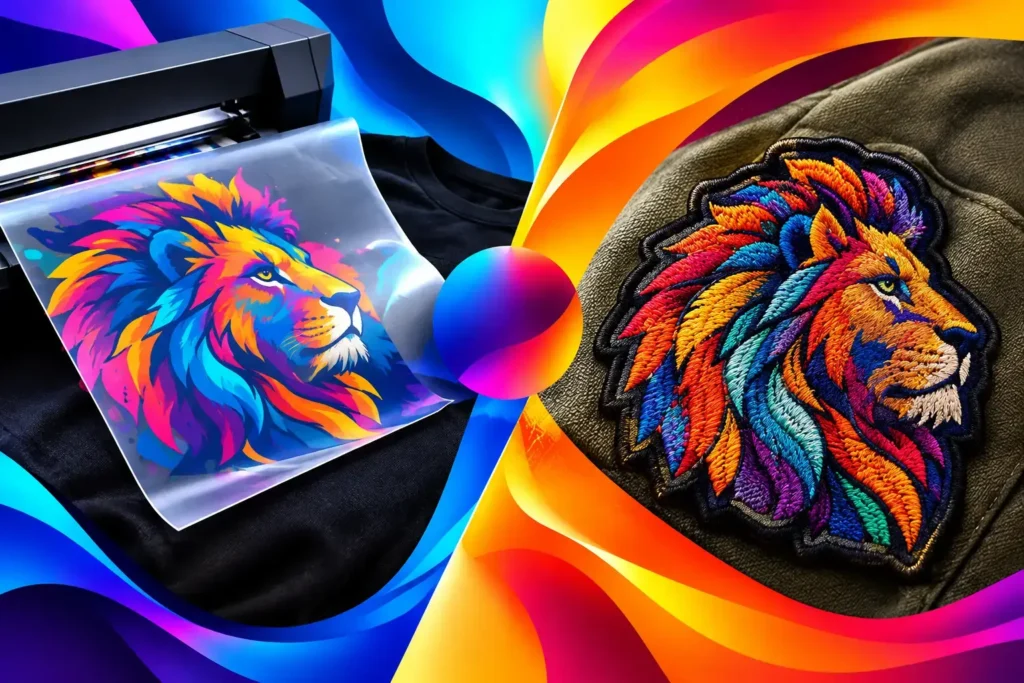
A restaurant needs logo shirts before opening weekend. A school needs spirit wear with a detailed mascot. A construction crew needs durable work uniforms that still look professional after long days. DTF versus embroidered patches is not just a style decision – it affects your artwork, turnaround time, garment choice, budget, and the impression your brand makes.
Both options can look great when they are matched to the right job. The better choice depends on what you are decorating, how much detail your design has, how the item will be used, and how quickly you need it done.
DTF Versus Embroidered Patches: The Main Difference
DTF, or direct-to-film printing, creates a full-color transfer that is heat pressed onto a garment or other compatible item. It is an excellent choice for artwork with gradients, photographs, tiny lettering, multiple colors, and detailed logos. The finished print is smooth, flexible, and designed to move with the fabric.
An embroidered patch is made by stitching thread onto a patch backing, then sewing, heat applying, or attaching it to the garment. It has raised texture and a traditional, premium appearance. Embroidery uses thread rather than ink, so designs are simplified into stitched shapes and colors.
Think of DTF as the choice for artwork that needs to look exactly like the original file. Think of embroidered patches as the choice for a tactile, dimensional badge that puts durability and classic branding first.
When DTF Is the Better Choice
DTF works especially well when your design is visually busy. If your logo includes color fades, shadows, illustrated characters, small print, or a wide color range, DTF keeps those details clear without screen setup or vinyl weeding. That makes it practical for everything from birthday shirts and memorial shirts to branded event apparel and product launches.
Speed is another major advantage. A properly prepared DTF transfer can be printed and pressed quickly, making it a strong option for urgent jobs, small orders, and full-color artwork that would be expensive or complicated to embroider. For customers who need a few shirts today or a repeatable transfer workflow for their apparel business, DTF is built for fast production.
DTF also gives you more freedom with placement. You can apply a large full-front graphic, a detailed back design, sleeve art, names, numbers, or multiple prints on the same garment. A large embroidered design can become heavy, stiff, and costly. A large DTF graphic stays much more comfortable for everyday wear.
For apparel decorators, DTF gang sheets are also a smart way to group multiple logos, chest prints, neck labels, and small designs on one sheet. You print what you need, cut it apart, and press each transfer as orders come in. That is useful for brands, teams, and businesses with several logo variations.
Best uses for DTF
DTF is usually the stronger fit for full-color business logos, event shirts, photo-quality designs, school graphics, promotional apparel, fashion artwork, and small runs with a lot of visual detail. It is also a practical solution when you need consistent color across a mix of designs without paying for separate setup costs for every color.
DTF does have a different finish than thread. The print sits on the surface of the fabric, so it does not deliver the same raised, stitched texture as a patch. On very textured or bulky garments, such as some fleece, heavy outerwear, or structured hats, placement and pressing need extra care.
When Embroidered Patches Are the Better Choice
Embroidered patches have staying power because they feel established. A clean embroidered logo on a work shirt, cap, jacket, bag, or uniform can make a business look polished right away. The thread texture catches the eye without relying on a large graphic, and the patch can handle regular use when it is made and attached correctly.
This option is especially strong for simple logos with bold lettering, clean outlines, and limited colors. Think landscaping companies, security teams, auto shops, clubs, service uniforms, scouts, and organizations that want a recognizable badge rather than a full-color illustration.
Patches are also useful when you want branding that can be applied to heavier materials. Jackets, backpacks, hats, workwear, and some outerwear often pair naturally with patches. A patch can be sewn on for a highly secure attachment, making it a good choice for garments that see frequent wear and washing.
The trade-off is detail. Thin lines, very small text, gradients, and photographic art do not translate well into thread. An embroidery specialist may need to simplify your logo, increase small lettering, or reduce the color count so the design stitches cleanly. That is not a flaw in embroidery – it is part of designing for the medium.
Best uses for embroidered patches
Choose embroidered patches for classic uniform branding, hats, jackets, work shirts, bags, club apparel, and logo designs that are bold and uncomplicated. They are also a strong choice when the feel of the decoration matters as much as the artwork itself.
Keep in mind that patch production can take longer than a straightforward DTF order, particularly if your design needs digitizing or approval before production. Complex embroidery also carries a higher cost because stitch count, thread changes, and setup all affect production time.
Compare Color, Feel, Durability, and Cost
Color is where DTF has a clear edge. It can reproduce vibrant full-color art, smooth blends, and subtle details without turning your design into a simplified version. If brand colors must be precise or your artwork has lots of tones, DTF provides more flexibility.
Feel is where embroidery wins for customers who want texture. A patch has a raised, crafted appearance that many people associate with uniforms, premium outerwear, and heritage branding. DTF has a softer, flatter profile and is often more comfortable for large artwork on tees and lightweight apparel.
Durability depends on the garment, application method, and care. A sewn embroidered patch is exceptionally secure and well suited to hardworking uniforms. Quality DTF transfers are durable too, especially when applied at the correct temperature and pressure and washed according to care instructions. Turn garments inside out, use cold or warm water, avoid harsh bleach, and skip high heat when possible.
Cost is not one-size-fits-all. For a small, simple chest logo, embroidery may be worth the investment because it delivers a premium look. For a large, colorful print or a short-run event order, DTF is often the more economical path. DTF avoids the per-color limits and detailed stitch costs that can push embroidery pricing higher.
Do Not Forget the Garment
The decoration should fit the garment instead of fighting it. Cotton and cotton blends are excellent candidates for DTF, while many polyester blends can also work with the right application settings. DTF is popular for T-shirts, hoodies, sweatshirts, athletic apparel, and tote bags.
Patches are especially natural on caps, polos, work shirts, jackets, denim, bags, and heavier fabrics. If you want to decorate a structured cap, an embroidered patch is often easier to position and gives a more traditional finish than a large printed graphic.
Before ordering, consider how the item will be worn. A soft family reunion shirt and a mechanic’s work jacket have different needs. The first may benefit from a bright, detailed DTF design. The second may look better with a durable embroidered patch over the chest.
A Smart Choice for Businesses and Events
You do not have to use only one method across your whole project. Many businesses get better results by mixing decoration styles. For example, use an embroidered patch on work jackets and hats, then use DTF for full-color promotional shirts, event staff tees, or detailed back prints.
That approach keeps the brand consistent while using each method where it performs best. It also gives you room to create a more complete apparel program instead of forcing one decoration style onto every item.
If you are working against a deadline, start with your artwork and garment list. Clear files, accurate quantities, and knowing whether you need a full-color print or a textured badge will speed up the process. GFX The Print Shop can help turn that decision into professional apparel without slowing down your schedule.
The best decoration is the one your customers, crew, or guests will actually want to wear again. Choose DTF when the art needs color and detail. Choose embroidered patches when the garment calls for texture, tradition, and a built-to-last badge.