
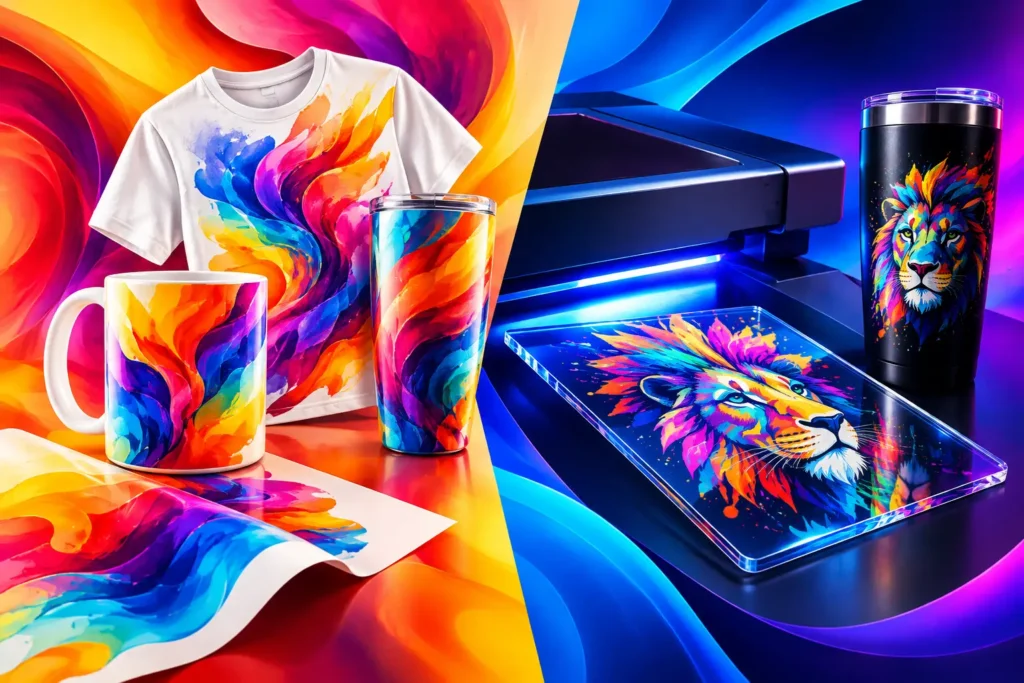
A custom tumbler, mug, shirt, or sticker can look great in a mockup and still be the wrong fit for the print method. That is why the sublimation versus UV DTF decision matters before production starts. Both create full-color, detailed custom products without screen setup, but they work in completely different ways – and they are not interchangeable.
For a business order, a school event, a birthday gift, or a product line, the right choice comes down to the material, the finish you want, and how the item will be used. Get that choice right early, and you avoid wasted blanks, delayed orders, and artwork that does not perform the way you expected.
Sublimation Versus UV DTF: The Core Difference
Sublimation uses heat to turn special ink into a gas that bonds with a polyester coating or polyester fabric. The image becomes part of the surface instead of sitting on top of it. On a proper sublimation blank, the result is smooth, permanent, and vibrant.
UV DTF is an adhesive transfer process. A UV printer lays down color, white ink, and usually a clear protective layer onto film. The finished design is then transferred by pressure onto a hard surface. It creates a crisp, slightly raised decal with excellent color and detail, without requiring a heat press.
Put simply: sublimation infuses ink into a compatible surface. UV DTF applies a durable printed transfer onto a surface. That one distinction explains nearly every difference in finish, application, and product compatibility.
When Sublimation Is the Better Choice
Sublimation is built for polyester apparel and coated blanks. It is especially strong for white or light-colored performance shirts, photo panels, mouse pads, ceramic mugs made for sublimation, coated tumblers, keychains, and promotional items with a polyester coating.
The biggest advantage is feel. Because the ink is embedded into the coating or fabric, there is no noticeable transfer edge and no heavy layer on the garment. A sublimated athletic shirt stays breathable, which makes it a smart option for team jerseys, workout gear, and warm-weather event shirts.
Sublimation also holds up well because the image cannot crack or peel off in the usual sense. There is no printed film sitting on the surface to lift. On coated drinkware and hard goods, it delivers a clean, polished look that works beautifully for photos, gradients, and full-color artwork.
There are limits. Sublimation needs polyester or a specially coated sublimation blank. It also works best on white or very light surfaces. The inks are transparent and do not include white ink, so they cannot turn a dark cotton shirt into a bright, full-color print. A yellow design on a black shirt, for example, is not a realistic sublimation job.
That makes sublimation less flexible for mixed-material orders. If a customer wants the same logo on black cotton tees, glass cups, and metal toolboxes, one sublimation setup will not cover the entire project.
Best uses for sublimation
Choose sublimation when the item is polyester or has a confirmed sublimation coating, the surface is light-colored, and a no-feel finish is the priority. It is a dependable option for sportswear, photo gifts, coated mugs, and product designs that need rich all-over color without vinyl-like texture.
When UV DTF Is the Better Choice
UV DTF shines when you need to brand hard, smooth items quickly. Think glass cups, tumblers, bottles, acrylic signs, plastic containers, notebooks, phone cases, candles, product packaging, and promotional items. It is also a strong choice for detailed logos, QR codes, names, and designs that would be tedious to cut in vinyl.
Unlike sublimation, UV DTF can print white. That makes it a major advantage for dark surfaces, clear glass, colored plastics, and products where the artwork must stand out instead of blending into the item underneath. A white logo with fine color detail can stay bold on a black water bottle or a clear can glass.
The application process is fast. Once the surface is clean and dry, you position the transfer, apply firm pressure, and peel the carrier film according to the transfer instructions. There is no weeding and no heat press required. For small-business branding, that speed can make UV DTF especially useful for short runs and last-minute promotional pieces.
The trade-off is texture. UV DTF sits on the surface, so you can feel it. The finish can look premium and dimensional, but it is not the invisible, infused finish that sublimation delivers. Placement matters too. The transfer needs a smooth area with enough contact for strong adhesion. Deep texture, sharp curves, silicone surfaces, soft rubber, and highly flexible materials can cause problems.
UV DTF is not the answer for shirts. It is designed for hard goods, not washable fabric. If you need prints on cotton, blends, or dark apparel, standard DTF transfers are usually the better route. They are made to heat press onto fabric and give you the flexibility that sublimation does not provide.
Best uses for UV DTF
Choose UV DTF for hard-surface customization, especially when the item is dark, clear, uncoated, or difficult to sublimate. It is ideal for branded drinkware, glassware, retail packaging, labels, gifts, and custom decals where quick application and sharp detail matter.
Compare the Finish, Durability, and Setup
Both methods can produce professional full-color results, but the finished product has a different personality. Sublimation is smooth and integrated into the blank. UV DTF is tactile, glossy or semi-glossy depending on the transfer, and visually bold.
Durability depends on using each method for the right material. A sublimated print on a quality coated tumbler is made for long-term use because the image is bonded into the coating. A properly applied UV DTF decal adheres strongly to compatible hard surfaces, but it can be damaged by picking at edges, abrasion, or poor surface preparation.
For drinkware, care instructions matter. Hand washing is the safer recommendation for UV DTF-decorated cups and tumblers, particularly for designs exposed to repeated dishwasher heat and harsh detergents. Sublimated drinkware may be more dishwasher-friendly when the blank and coating are rated for it, but the manufacturer’s blank specifications should always guide the final recommendation.
Setup is another major difference. Sublimation requires a sublimation printer, ink, paper, heat press or tumbler press, and compatible blanks. UV DTF requires a UV DTF printer or ready-made transfers, along with careful application to clean hard goods. If you are buying finished products or transfers instead of printing in-house, the choice is less about equipment and more about what you are decorating.
How to Choose the Right Method for Your Order
Before sending artwork or buying blanks, answer four practical questions:
- Is the item polyester, sublimation-coated, or a hard smooth surface?
- Is the item white or light-colored, or does the design need white ink?
- Do you want a completely smooth finish or a raised decal look?
- Will the product be washed, handled heavily, bent, or exposed to heat?
If you have a white polyester shirt or a coated photo mug, sublimation is likely the cleanest choice. If you have a clear glass cup, black tumbler, acrylic sign, or colored product packaging, UV DTF is usually the more practical option. If the order is for cotton hoodies or dark T-shirts, neither UV DTF nor sublimation is the first choice – ask for standard DTF apparel transfers instead.
Artwork can affect the decision as well. Both methods handle full-color images and detailed logos, but UV DTF is especially useful when a design includes white lettering or needs to stand out on transparent or dark backgrounds. Sublimation is excellent for photos, gradients, and designs that benefit from an edge-free finish.
Get the Blank and the Print Method Working Together
The best custom products start with a match between the blank and the decoration method, not just a great design. A low-cost uncoated mug will not become a sublimation mug because the artwork looks good. A textured bottle will not become UV DTF-friendly because the decal is high quality.
For urgent orders, it is worth confirming the product material before production. GFX The Print Shop can help customers sort through apparel, drinkware, stickers, and promotional items so the final print looks professional and holds up to real use.
Bring the item, the artwork, and the intended use into the conversation from the start. That small step makes it much easier to choose a print method that looks right on day one and still represents your brand, event, or message after the item leaves your hands.