
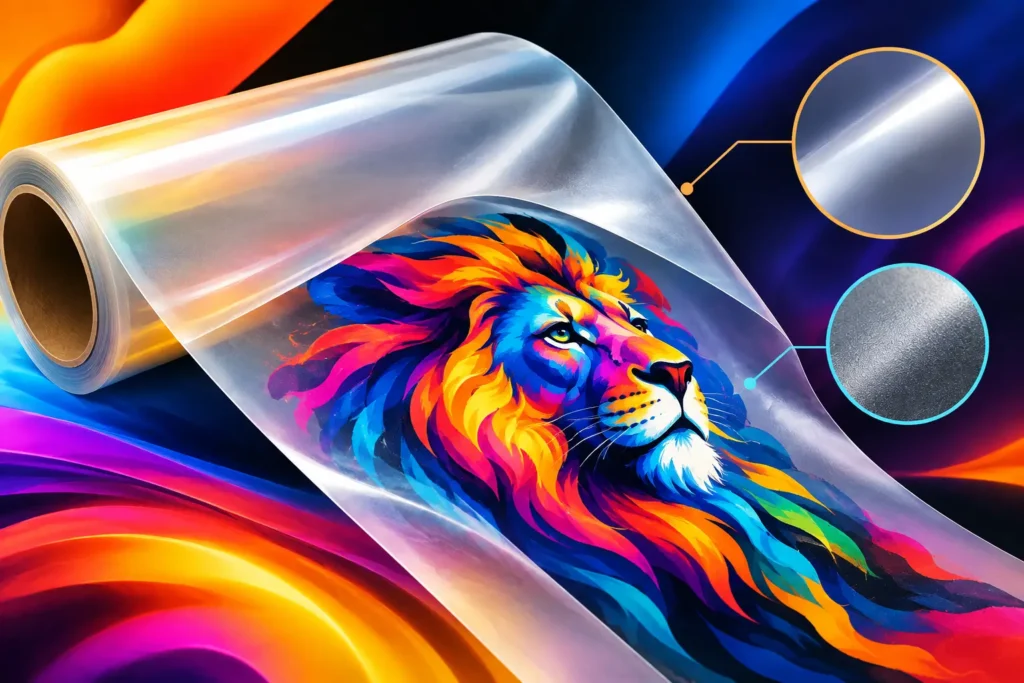
A DTF film review should answer one question before anything else: will this film help you produce clean, repeatable transfers when the order is due? A low film price means very little if the print releases unevenly, colors look weak, fine lines break apart, or your press operator has to fight every sheet.
For apparel brands, print shops, event planners, and anyone ordering gang sheets, film is not just a supply item. It affects production speed, garment quality, and whether a customer comes back for the next order. The right DTF film supports bright full-color artwork, sharp details, and a smooth transfer process without vinyl weeding or screen setup.
What a Good DTF Film Needs to Do
DTF film carries the printed design through several critical steps: printing, powder application, curing, pressing, peeling, and final finishing. If it performs poorly at any stage, the problem shows up on the shirt. That can mean missing detail, a rough print surface, poor adhesion, or a transfer that looks acceptable at pickup but starts cracking after wear.
A quality film should feed consistently through the printer and lie flat during printing. It needs a coating that accepts ink evenly, especially white ink, without puddling or creating gaps in solid areas. After powder and cure, the film should release on command and leave a clean image behind.
That sounds simple, but every shop knows the difference between a transfer that peels cleanly and one that turns a quick job into wasted garments. Reliable materials keep production moving, whether you are pressing a single birthday shirt or preparing uniforms for an entire crew.
DTF Film Review: The Details That Matter Most
The most useful way to review DTF film is by how it performs in actual production, not by how it looks in the package. Clear, matte, cold-peel, hot-peel, and warm-peel films can all have a place in a shop. The best choice depends on your printer, inks, powder, curing method, press settings, garment type, and workflow.
Release behavior
Release behavior is usually the first thing operators notice. A clean-release film should peel without pulling small details, stretching the design, or leaving pieces of ink behind. Fine text, thin outlines, and small logos are the real test. A large blocky image may hide a weak film, but a detailed chest logo will expose it quickly.
Cold-peel film is popular because it gives the transfer time to set before removal. It can deliver crisp edges and a clean finish, but it does require patience. Peeling too soon can cause lifting or distortion. Hot-peel and warm-peel options can speed up production, which matters for high-volume runs and same-day jobs, but they must be matched carefully to the recommended press temperature and time.
There is no single peel style that wins every job. If your priority is maximum speed, a dependable hot-peel workflow may be the better fit. If fine detail and controlled release matter more, cold peel may be worth the extra seconds.
Ink coverage and color
Good DTF film gives ink a stable surface to sit on. When the coating is consistent, colors print more evenly and white ink builds a better foundation beneath the artwork. This matters most with bright colors, gradients, skin tones, and designs with transparent-looking highlights.
Poor film can make a strong print profile look weak. You may see patchy color, grainy fills, or inconsistent white underbase coverage. Before changing printer settings, check the supplies. Film, ink, powder, humidity, and curing conditions all work together.
A proper test print should include bold colors, small lettering, soft gradients, and a solid white shape. If the image looks clean before pressing but dull after transfer, the issue may be press pressure or temperature. If it looks uneven right off the printer, investigate the film coating, printhead performance, and white ink circulation.
Powder hold and cured finish
The powder stage is where a lot of transfers are won or lost. Film should hold powder evenly across printed areas while releasing excess powder from unprinted sections. When too much powder sticks around fine lettering and open spaces, the finished design can look dirty or feel heavier than it should.
After curing, the adhesive should look uniform and properly melted. Under-cured powder may not bond well to the garment. Over-curing can affect the adhesive and lead to a stiff or brittle result. A reliable film helps, but it cannot compensate for a rushed curing process or incorrect oven settings.
Look at the back of a cured transfer before you press it. The adhesive layer should be even, with no bare patches in printed areas and no heavy powder buildup around the design. This quick check can prevent a lot of avoidable reprints.
Feel, stretch, and wash performance
Customers judge the transfer by touch as much as appearance. DTF prints generally have more presence than screen print ink, especially on large designs, but a well-produced transfer should still feel flexible and comfortable. The film itself plays a role in how cleanly the adhesive and ink layer transfer to the garment.
Stretch testing is especially useful for athletic wear, work shirts, and fitted garments. Gently stretch the fabric after pressing and cooling. The design should flex with the garment without opening cracks or lifting at the edges. Then test a washed sample before committing to a major run.
Wash durability is never only about the film. Pressing temperature, dwell time, pressure, garment fabric, powder, and post-press all matter. Still, film that releases cleanly and supports an even adhesive layer gives you a better starting point for long-lasting results.
Film Choice Depends on the Job
A universal film may handle most orders, but not every order needs the same setup. A small left-chest logo on a polo has different demands than a large, full-color back print on a hoodie. Cotton, polyester, blends, and performance fabrics can respond differently under heat and pressure.
For busy apparel production, consistency is often more valuable than chasing the lowest cost per sheet. A film that costs slightly more but reduces failed transfers, reprints, and press time can protect your margins. This is especially true when you are handling a deadline-driven school event, a family reunion, a restaurant uniform order, or a launch for a growing clothing brand.
Gang sheets add another consideration. When multiple logos, names, and designs are packed into one layout, clean release becomes even more important. You may have large prints, tiny sleeve marks, and detailed neck labels on the same sheet. Film needs to handle all of them without forcing you to compromise the artwork.
How to Test DTF Film Before a Large Order
Do not judge a new film from one simple transfer. Run a small production-style test using the same printer, powder, curing method, press, and garments you plan to use for customer orders. Testing with random settings can create misleading results.
Start with a design that includes solid color, thin lines, small text, and a gradient. Print several copies, then cure and press them using the film supplier’s recommended settings as your baseline. Check the peel, edge detail, color, feel, and stretch. Wash at least one sample according to normal garment-care conditions.
If the results are close but not perfect, make one adjustment at a time. Change press pressure before changing five variables at once. Try a slightly longer or shorter press only after confirming your temperature is accurate. A reliable heat press and a simple temperature check can reveal problems that get blamed on film.
Keep notes on what works. Record film type, ink set, powder, cure time, press temperature, pressure, peel timing, and garment material. Once you find a repeatable combination, you have a production recipe your team can use with confidence.
Common Problems That Are Not Always the Film
Film gets blamed for plenty of issues that begin elsewhere. If a transfer will not adhere, check pressure and actual platen temperature. If white ink looks weak, inspect nozzle performance and ink maintenance. If powder clings where it should not, look at static, humidity, powder quality, and how the sheet moved through the shaker.
Storage matters too. Keep film clean, dry, flat, and away from extreme heat or moisture. Dust, fingerprints, and curled edges can affect print quality before the film even reaches the printer. A clean production area is not about appearances – it protects your output.
When you need dependable transfers for personal orders, business apparel, or repeat wholesale work, GFX The Print Shop focuses on professional-quality DTF production that is built for fast, practical results. The goal is simple: transfers that press cleanly, look sharp, and help you deliver on time.
The best film is the one that performs consistently in your real workflow, not just on a product label. Test it on the garments your customers wear, press it with disciplined settings, and let clean releases and durable prints earn your confidence one finished shirt at a time.