
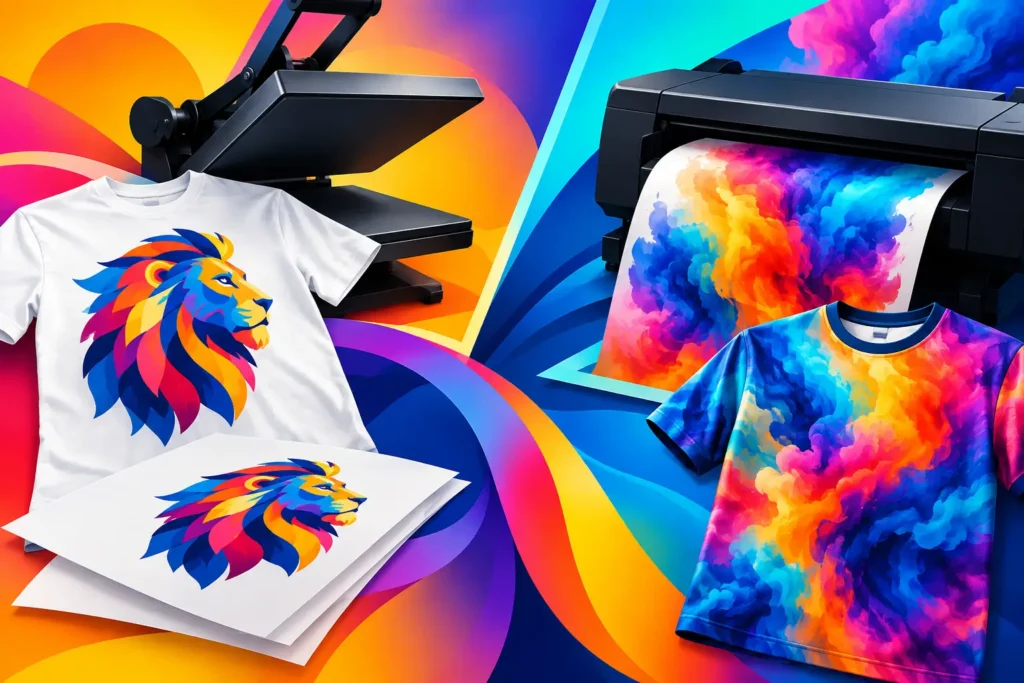
A black cotton work shirt with a full-color logo, a last-minute family reunion tee, and a polyester team jersey may all need custom printing, but they do not need the same printing method. When comparing custom transfers vs sublimation, the best choice comes down to the garment, the artwork, the quantity, and how quickly you need the job finished.
For many customers, the real question is simple: Will the print look professional, hold up after washing, and arrive on time? Both methods can produce great results. The difference is where each one performs best.
Custom Transfers vs Sublimation: The Quick Difference
Custom transfers, especially DTF transfers, are printed designs that are applied to a garment with a heat press. The design sits on the fabric surface, creating a bright, detailed print that works on cotton, polyester, blends, and many other materials. This is the practical choice for most mixed garment orders, dark shirts, full-color logos, and small-batch custom jobs.
Sublimation uses heat to turn special ink into a gas that bonds with polyester fibers. Instead of sitting on top of the fabric, the design becomes part of the material. The result is soft, permanent, and excellent for polyester apparel, but it has strict fabric and color requirements.
Neither method wins every job. A light polyester performance shirt is a strong sublimation candidate. A black cotton hoodie with a colorful business logo is a clear custom transfer job.
When Custom Transfers Are the Better Choice
Custom transfers are built for flexibility. If your order includes dark shirts, cotton tees, hoodies, tote bags, work uniforms, or a mix of garment styles, DTF transfers make the process much easier. There is no need to limit your design to light-colored polyester.
This matters for small businesses that want one logo across several products. A restaurant may need black staff tees, gray hoodies, branded aprons, and a few promotional tote bags. A construction company may need high-visibility polyester shirts alongside cotton work shirts. With custom transfers, the artwork can stay consistent while the garment selection stays practical.
DTF also handles detailed designs well. Fine text, gradients, photos, colorful illustrations, and multi-color logos print without the setup demands of traditional screen printing. There is no vinyl weeding for every small detail, which saves time and keeps complicated artwork from becoming a production headache.
Dark Garments Need a Strong Base
One major advantage of custom transfers is opacity. DTF printing typically includes a white ink layer behind the color. That means a yellow logo can remain bright on a black shirt, and a detailed photo can show up clearly on a navy hoodie.
Sublimation does not print white ink. On a dark garment, the fabric color shows through the design, which can make colors disappear or change dramatically. If your brand colors need to look right on dark apparel, transfers are usually the dependable option.
Better for Mixed Fabrics and Short Runs
Custom transfers work well for one shirt, 12 shirts, or a larger branded run. That makes them useful for birthday shirts, memorial apparel, school events, pop-up vendors, employee uniforms, and apparel brands testing a new design.
They are also a smart fit when customers bring their own garments or need a design applied across cotton, polyester, and blends. The key is using the correct heat-press settings for each fabric. A professional shop checks the material, temperature, pressure, and pressing time instead of treating every garment the same.
When Sublimation Is the Better Choice
Sublimation shines when the garment is made from polyester and the design is going on a white or very light-colored surface. Think team jerseys, performance shirts, lightweight athletic apparel, polyester event tees, mugs with sublimation coating, and certain promotional products.
Because the ink bonds into the fibers, a sublimated print has no raised layer. You can run your hand across the shirt and barely feel the design. It is especially useful for all-over color and large designs that would feel too heavy as a transfer.
For example, a youth sports team ordering white polyester jerseys with player names, numbers, and colorful graphics may get excellent results with sublimation. The print will not crack, peel, or add noticeable weight to the jersey.
The Softest Feel on the Right Material
If feel is the top priority, sublimation has an advantage on compatible garments. There is no transfer film sitting on the surface. The fabric stays breathable, and the color becomes part of the shirt.
That benefit comes with a trade-off: sublimation needs a high polyester content for vivid results. A 100% polyester shirt produces the strongest color. On a 50/50 blend, the final look can be intentionally faded or vintage because only the polyester fibers accept the ink. Cotton fibers remain untouched.
This can look great when it is planned. It is not ideal when a business expects a bold, solid logo that matches its brand guide exactly.
Print Quality, Durability, and Feel
Both methods can last through repeated washing when printed and cared for properly. Sublimation has the edge in permanence because the ink is infused into the polyester. There is no printed layer to lift or crack.
High-quality DTF transfers are also durable and designed to stretch with the garment. The finished print has a soft, flexible feel compared with older, thicker transfer methods. It is not invisible to the touch like sublimation, but it provides strong color and excellent detail on a much wider selection of fabrics.
For everyday care, turn printed garments inside out, wash in cold water, use a mild detergent, and avoid high heat when possible. Customers should not iron directly over a transfer. These simple steps help protect the print and the garment itself.
Speed and Production Flexibility
Urgent orders are where custom transfers often make the most sense. A single print-ready design can be produced quickly and pressed onto the needed garments without screen setup or color-by-color vinyl cutting. For event planners, local businesses, and families with a deadline, that flexibility can make the difference between having shirts for the event and missing the moment.
Sublimation can also move quickly, especially for standard polyester items. But the available product must be compatible from the start. If the customer wants black cotton shirts tomorrow, switching to sublimation is not an option. The material and garment color set the limits.
At GFX The Print Shop, this is why DTF is a go-to solution for many fast-turnaround apparel orders. It gives customers more garment choices while still delivering full-color, professional-quality prints.
Cost: Look at the Full Job, Not Just the Shirt
A lower-priced blank garment is not always the lowest-priced finished product. Sublimation may require a specific white polyester shirt, while custom transfers can be applied to a broader range of blanks. If your staff already wears a preferred cotton polo or your brand needs black tees, the garment requirement alone may decide the method.
Artwork matters, too. A simple one-color design may have several economical production options. A photo, gradient, or detailed logo with six colors is often easier to produce with a full-color transfer because the complexity does not create a separate setup for each color.
For large runs of the same simple design, other print methods may also be worth discussing. But for short runs, detailed artwork, varied apparel, and jobs that need to move fast, custom transfers are often the practical value choice.
Choose Based on the Garment First
Start with the fabric and color before falling in love with a printing method. If you need bright artwork on cotton, blends, dark garments, or assorted products, choose custom transfers. If you need a soft, permanent print on white or light polyester, sublimation may be the better match.
Bring your artwork, garment idea, quantity, and deadline to the conversation. A good print partner can help you avoid the expensive mistake of choosing a process that looks great in theory but does not work for the shirt you actually need.