
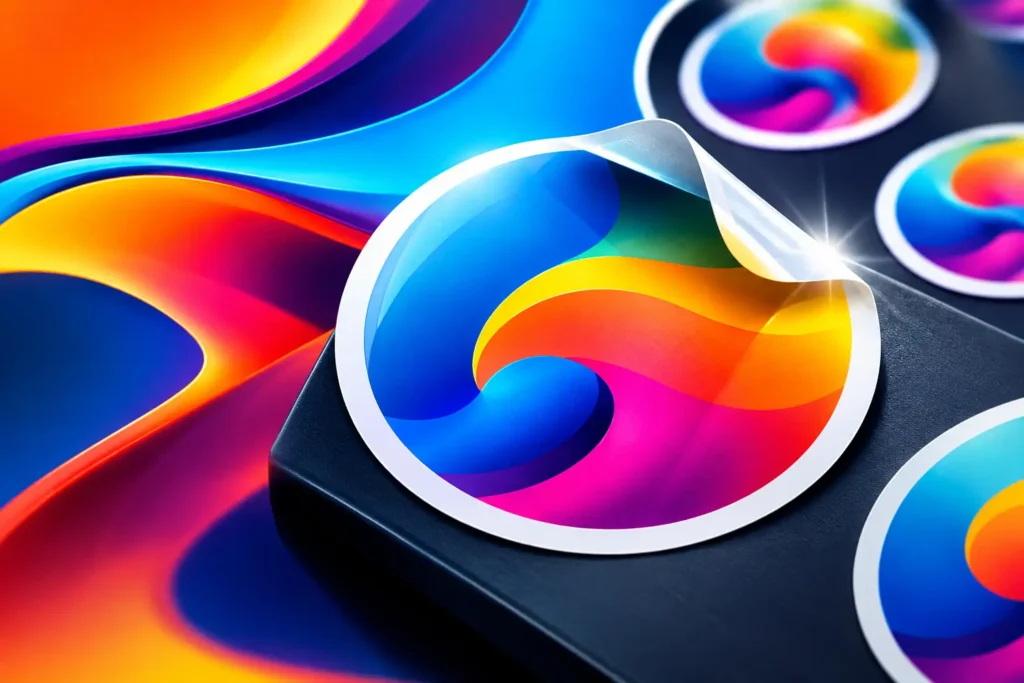
A sticker that fades after a few weeks, peels at the corners, or looks dull on arrival does not help your brand. UV vinyl stickers are made for the jobs that need to look clean, colorful, and professional long after the first photo, sale, or event.
For small businesses, event planners, product sellers, and everyday customers, they offer a practical way to put a logo, message, design, or personal touch on the surfaces people see most. Think storefront windows, product packaging, water bottles, vehicles, equipment, laptops, promotional giveaways, and more.
What Are UV Vinyl Stickers?
UV vinyl stickers are printed on vinyl using UV-cured inks or designed with UV-resistant materials and finishing. The goal is simple: produce graphics that hold their color and detail when exposed to sunlight, handling, moisture, and regular use.
The term can mean different things depending on the print method. A traditional UV vinyl sticker is usually a printed adhesive vinyl decal that is cut to shape and applied to a flat or gently curved surface. A UV DTF sticker is a transfer-style decal that uses a special adhesive film and is often used for hard goods such as tumblers, glassware, plastic containers, and promotional items.
Both can create high-impact full-color branding, but they are not interchangeable. If your job requires a sticker for a window, wall, sign panel, or vehicle, standard adhesive vinyl is often the better choice. If you need a detailed graphic transferred to a mug, candle jar, bottle, or other hard product, UV DTF may be the right fit. The surface and the intended use should drive the decision.
Why UV Vinyl Stickers Work for Real-World Branding
A great sticker has to do more than look good on a proof. It needs to survive the way people actually use it. That is where quality materials, proper printing, and the right finish make a difference.
Bright color that stays visible
UV printing produces rich color, crisp lines, and sharp small details. That matters when your design includes a logo, a QR code, fine text, product information, or a detailed illustration. A weak print can make a professional business look unprepared. A clean, full-color decal helps your brand look established from the first impression.
For outdoor-facing applications, UV resistance helps reduce fading caused by sun exposure. It does not mean every sticker will last forever in every condition. Constant direct sun, extreme weather, rough cleaning chemicals, and heavy abrasion will affect any printed product over time. Still, choosing the correct vinyl and finish gives your graphic a much better chance of staying clear and presentable.
Built for more than one surface
Vinyl is popular because it can work across many projects without requiring an expensive setup. A local restaurant can use it for pickup labels and window promotions. A construction company can add equipment labels and safety messaging. A beauty brand can make product packaging look more polished. Families can create custom decals for birthdays, graduations, memorials, and reunions.
The key is matching the adhesive and material to the surface. Smooth, clean, nonporous surfaces usually give the best result. Glass, metal, sealed plastic, acrylic, and finished wood are common choices. Textured walls, untreated wood, silicone, oily plastics, and heavily curved surfaces can be more challenging.
A practical option for short runs and bulk orders
Not every job needs thousands of stickers. Sometimes you need 25 branded jar labels for a launch, 50 decals for a team event, or one custom design for a special gift. Other times, you need a larger run for product packaging, retail giveaways, or a company fleet.
Vinyl sticker printing works well for both. You can order a focused batch without screen setup or complicated color limits, then scale up when the design becomes part of your regular operation. That flexibility is valuable for businesses testing a new product, launching a seasonal promotion, or rebranding without wasting inventory.
Choosing the Right Finish and Cut
A sticker’s finish changes its look and performance. Glossy vinyl makes colors pop and gives designs a bold, polished appearance. It is a strong choice for product labels, promotional decals, and colorful artwork. Matte vinyl has a softer, less reflective look that can feel more premium or understated. It is often a good fit for minimalist branding, indoor displays, and designs where glare could be a problem.
Lamination adds another layer of protection against scratching, moisture, and fading. For decals that will be handled often or used outdoors, laminated vinyl is usually worth considering. For a short-term indoor promotion, an unlaminated option may be enough and may help keep costs lower.
Cut style matters, too. Kiss-cut stickers are cut through the vinyl layer but left on a backing sheet, which makes them easy to hand out or include in packaging. Die-cut stickers are cut all the way through the backing in the exact shape of the design. They feel more like a finished standalone decal and are popular for giveaways, branded merch, and retail sales.
A simple square or circle can be cost-effective and easy to apply. A custom contour cut around your logo or artwork can create a stronger visual impact. Neither is automatically better. Choose the format that fits your design, budget, and how customers will use the stickers.
Artwork Setup That Prints Cleanly
The fastest way to get a better sticker is to start with better artwork. A clear logo file, high-resolution image, or vector design gives the printer more to work with and helps avoid blurry edges or pixelated text.
For logos and simple graphics, vector files are ideal because they can be sized without losing clarity. For photos or detailed raster artwork, use a high-resolution file. Small text needs extra attention. If lettering is too thin or too small, it may be hard to read once printed, especially from a distance.
Leave a little breathing room around important parts of the design. Text placed too close to the cut line can look crowded or get trimmed too tightly. If you want a white border around your sticker, build that into the design or clearly request it. The same goes for transparent backgrounds, custom shapes, and special placement instructions.
For business orders, send the final approved logo version whenever possible. A screenshot pulled from social media may work for a quick personal project, but it is rarely the best choice for polished retail packaging or professional signage.
How to Apply Vinyl Stickers for a Smooth Finish
Even the best print needs a clean application surface. Before applying your sticker, wipe down the area with a lint-free cloth and a suitable cleaner. Remove dust, grease, wax, and moisture, then let the surface dry completely.
Take your time positioning the decal before pressing it down. Once adhesive vinyl makes firm contact, repositioning may be difficult. Start at one edge and work slowly across the sticker, using steady pressure to push out air as you go. A squeegee or application card can help with larger decals.
Avoid applying stickers in extremely cold, wet, or dusty conditions. Temperature can affect adhesive performance, especially on vehicle surfaces and outdoor signs. If the item will be washed or heavily handled, allow the adhesive time to cure before putting it through regular use.
When UV DTF Is the Better Choice
If your design is going on a tumbler, mug, bottle, phone case, candle vessel, or similar hard item, UV DTF transfers may offer more flexibility than traditional vinyl. They can reproduce full-color graphics and fine detail without the need to weed individual vinyl pieces.
UV DTF is especially useful for personalization. Names, small logos, event graphics, and custom product branding can be applied efficiently to many hard surfaces. It is not the right solution for every job, though. Surface texture, material type, washing conditions, and heavy abrasion all affect durability. For example, a dishwasher-safe expectation should be discussed before choosing any decal method.
At GFX The Print Shop, the right recommendation starts with what you are applying, where it will be used, and how long it needs to perform. That approach helps prevent ordering a great-looking product that is wrong for the job.
Get More Value From Every Sticker Order
Think beyond the sticker itself. A well-designed decal can act as packaging, advertising, a product label, a thank-you insert, an event favor, or a mobile brand impression. One strong logo sticker on a water bottle, laptop, delivery bag, or vehicle can keep working long after a flyer gets thrown away.
For repeat business use, keep your approved artwork organized and use consistent colors, sizing, and finishes across every order. It makes your brand easier to recognize and speeds up future production. For personal projects, focus on the surface, the message, and the moment. The best sticker is not always the biggest or most complicated one. It is the one that fits the job, applies cleanly, and still looks right when people see it weeks or months later.