
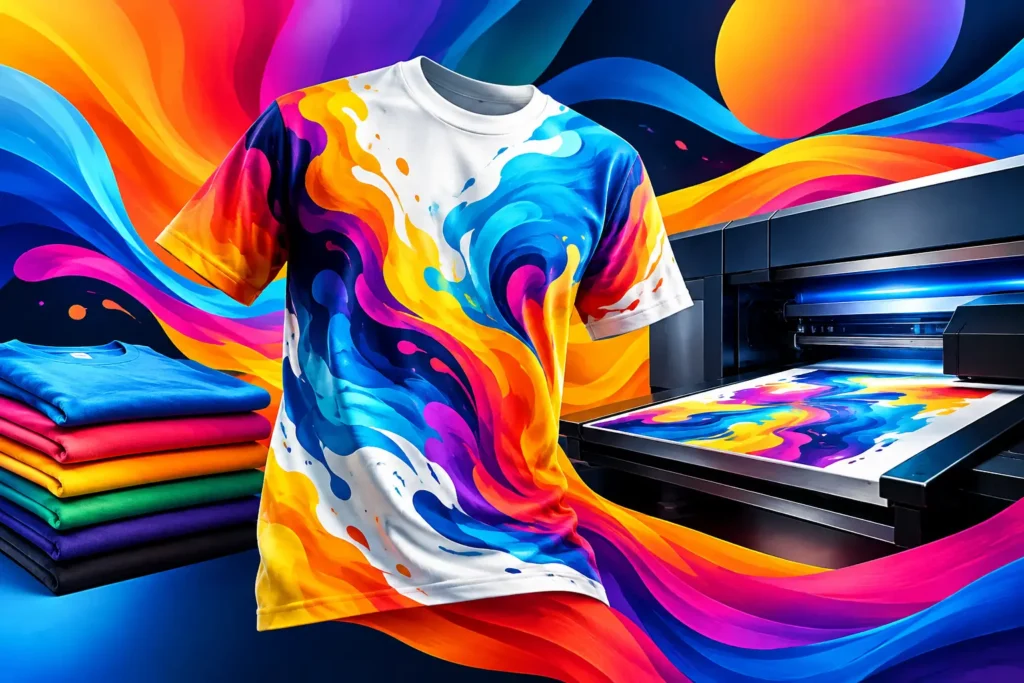
A photo-real birthday shirt, a restaurant uniform with a detailed logo, and a 100-piece event order can all need the same thing: bright color, clean detail, and a turnaround that does not hold up the job. Full color transfer printing makes that possible without the setup time and color limitations that can come with other apparel decoration methods.
For customers, that means more freedom to create. For apparel brands, event planners, and resellers, it means a practical way to handle short runs, repeat orders, and detailed artwork without turning every job into a production headache.
What Is Full Color Transfer Printing?
Full color transfer printing creates a design on a specialized film or transfer material, then uses a heat press to apply that design to the finished product. The result is a vibrant, detailed print that can include multiple colors, gradients, fine text, photographs, and full-color logos.
DTF, or direct-to-film printing, is one of the most versatile options in this category. The artwork is printed onto film with color and white ink, coated with adhesive powder, cured, and heat pressed onto the garment. Unlike cut vinyl, there is no need to weed individual letters or small design details. Unlike traditional screen printing, there is no separate screen setup for every color in the art.
That difference matters when your design includes a mascot with shading, a multicolor company logo, a memorial photo, or a custom graphic with several colors. A good transfer keeps those elements together in one professional print.
Why Businesses and Customers Choose Full Color Transfer Printing
Speed is often the first reason. When a customer needs shirts for a party this weekend or a business needs uniforms before a new crew starts, waiting through extensive setup can be a problem. Transfer printing keeps production moving, especially for smaller orders and artwork with many colors.
It is also a strong choice for customization. A school may need the same front logo with different names and numbers. A family reunion may need a shared design with several shirt sizes. A clothing brand may want to test a new graphic before committing to a large run. Transfers make these jobs easier to produce without forcing every order into a high minimum.
Color flexibility is another major advantage. Full color printing can reproduce bright graphics, gradients, skin tones, complex illustrations, and detailed branding in ways that are difficult or expensive with single-color decoration. White ink also helps designs stand out on dark garments, giving artwork the contrast it needs to stay readable.
That does not mean every project should use the same method. A simple one-color logo on hundreds or thousands of shirts may still be a better fit for screen printing, depending on the deadline, garment, and budget. The best process is the one that matches the order, not the one with the most hype.
Best Uses for Full Color Transfer Printing
This process works especially well when the design is too detailed for basic vinyl or when the order quantity does not justify screen setup. It is popular for custom T-shirts, hoodies, sweatshirts, work uniforms, team gear, tote bags, and promotional apparel.
Small businesses can use it for staff shirts with full-color logos, service details, and QR codes. Event organizers can create colorful shirts for birthdays, graduations, fundraisers, reunions, and community events. Apparel decorators can order ready-to-press transfers or gang sheets, then apply them to garments as orders come in.
It is also useful for customer orders that change quickly. Need to add a name, adjust a phone number, or update an event date? Editing a digital file is far simpler than remaking screens or cutting and weeding a complicated vinyl design.
Artwork Makes the Difference
The transfer can only print what the artwork provides. A strong file gives you sharper edges, cleaner small text, and more accurate color. A blurry image pulled from social media may look acceptable on a phone but print soft when enlarged across the front of a shirt.
For logos and text-based designs, vector files such as AI, EPS, SVG, or print-ready PDF are usually the best option. They can scale without losing sharpness. For photos and detailed raster artwork, use a high-resolution PNG or TIFF at the final print size. Transparent backgrounds are helpful when the design should appear without a colored box around it.
Small details deserve extra attention. Thin lines, tiny lettering, and low-contrast elements may not hold up well at a small size. If a customer wants a chest logo, simplify the artwork instead of shrinking a full back design down to three inches wide. A design that looks bold and readable from a few feet away will usually make the better shirt.
Before production, check spelling, dates, phone numbers, and placement. A beautiful full-color print cannot fix the wrong event date.
Choosing the Right Garment and Placement
Full color transfers work on a wide range of fabrics, including cotton, polyester, blends, and many performance garments. That versatility is a major reason businesses use them for mixed uniform orders. You can often keep the same logo across tees, hoodies, polos, and other apparel while maintaining a consistent look.
Still, fabric matters. Polyester garments need the right application settings to help prevent dye migration, where color from the garment can move into a light-colored print. Stretchy performance wear needs a transfer with flexibility. Textured garments can affect how smoothly the design applies. A reliable print partner will consider the material before pressing the order, not after.
Placement should match how the garment will be worn. Left-chest prints are clean and professional for uniforms. Full-front prints give event graphics and brand artwork more impact. Back prints work well for service businesses that want their phone number, website, or team name visible from a distance. Sleeve prints can add a premium detail, but they should stay simple because the available space is limited.
Full Color Transfer Printing vs. Other Methods
Transfer printing is not a replacement for every print method. It is a flexible production tool with clear strengths.
Screen printing can be highly cost-effective for large runs of simple artwork. It produces a classic printed feel and remains a smart option for high-volume orders with limited colors. However, setup can make it less practical for a few shirts or a design with lots of colors.
Heat transfer vinyl is useful for names, numbers, and basic lettering. It can be a solid option for simple personalization, but complex multicolor artwork means more cutting, more weeding, and more opportunities for alignment issues. Full color transfers remove much of that manual work.
Sublimation creates excellent color on white or light polyester products, but it is not designed for dark cotton shirts. Embroidery gives hats, polos, and workwear a textured, premium look, yet it cannot reproduce a photograph or intricate multicolor illustration. The right choice depends on the artwork, fabric, quantity, budget, and deadline.
Ordering Transfers for Your Own Production
For decorators, DTF transfers and gang sheets can keep your shop efficient. A gang sheet places multiple designs, sizes, or logo variations on one sheet so you can use the available print area wisely. This is useful when you have several small orders, chest logos, or mixed graphics ready to press.
Build your sheet carefully. Leave enough room between designs for trimming, keep the artwork at final print size, and double-check that every logo is included. If a design needs a transparent background, send it that way. Adding a white rectangle behind an image by mistake can change the entire finished look.
When pressing transfers, follow the recommended temperature, pressure, and peel instructions for the specific film and garment. Even premium transfers need the correct application. A heat press should deliver even pressure across the platen, and the garment should be positioned flat with no seams, pockets, or zippers interfering with the print area.
For customers who do not want to handle production themselves, GFX The Print Shop can take the job from artwork through finished apparel, including urgent custom orders and business-ready branded gear.
Care That Helps Prints Last
Durability begins with proper application, but garment care matters too. Turn printed apparel inside out before washing, use cold or warm water, and avoid harsh bleach directly on the design. Tumble dry on low when possible. If ironing is needed, do not place a hot iron directly on the transfer.
A quality transfer should stay bright through regular wear and washing when it is applied correctly and cared for properly. That makes it a practical choice for work shirts, school gear, and everyday custom apparel, not just one-time event pieces.
The best print job starts with a clear goal: what needs to be printed, how fast it is needed, and how the garment will be used. Bring the right artwork, choose a garment that fits the job, and do not wait until the last minute to check the details. When the design has to look sharp and the deadline is real, full-color transfers give you a fast path from idea to finished apparel.