
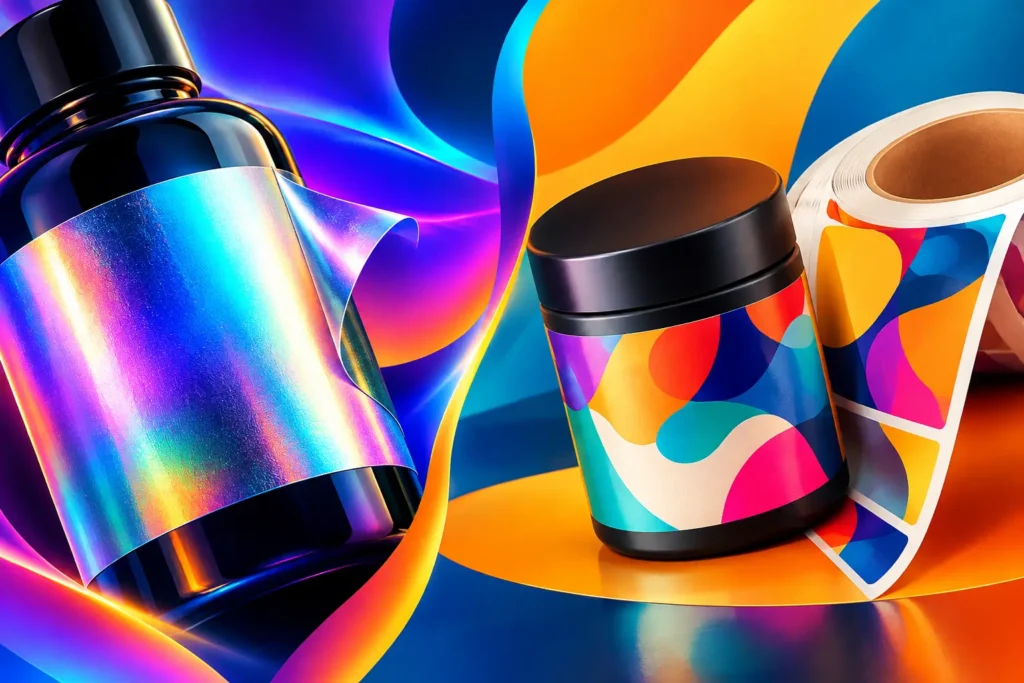
A label that wrinkles on a glass bottle or a decal that cannot handle a tight curve can make a great product look unfinished. When comparing UV decals versus printed labels, the right choice comes down to where the design is going, how the item will be handled, and the finished look you want customers to see.
For small businesses, event planners, product makers, and decorators, both options can deliver sharp full-color branding without a major setup process. They are not interchangeable, though. UV decals are built for a clean, direct-to-surface look on hard goods, while printed labels are often the practical choice for packaging, product information, and repeat application across many items.
UV Decals Versus Printed Labels: The Main Difference
A UV decal, often called a UV DTF decal or UV DTF sticker, is a full-color design printed with UV inks and transferred directly onto a hard, smooth surface. The design is carried on a transfer film, then pressed onto the item by hand. Once applied, the top carrier film is removed, leaving the artwork itself on the surface.
A printed label is a printed piece of adhesive material, such as paper, vinyl, or film. It is peeled from its backing and applied as one complete label. The material remains around the design, whether it is a rectangle, circle, custom die-cut shape, or a clear label.
That difference affects the final appearance. UV decals can create a polished, printed-on look with no visible background around the artwork. Printed labels have a defined material edge, even when that edge is subtle on clear vinyl or a precisely cut shape.
When UV Decals Make the Stronger Impression
UV decals work especially well on smooth, rigid items where you want bold branding without heat pressing, weeding vinyl, or screen printing. Think tumblers, glass cups, mugs, jars, acrylic signs, plastic containers, product boxes, metal accessories, and promotional items.
The finish is one of the biggest selling points. UV DTF decals can reproduce fine lines, gradients, small lettering, and full-color logos with a raised, premium feel. For a candle maker adding a logo to glass jars or a real estate agent branding closing gifts, that direct-to-surface appearance can make a simple item feel more custom.
They are also useful for short runs. If you need a dozen custom drinkware pieces for a birthday, memorial, school event, or business giveaway, UV decals let you get detailed color without ordering a large run of pre-printed products. The same is true for small businesses testing a new product line before committing to bulk packaging.
What to watch for with UV decals
UV decals need the right surface. They perform best on clean, dry, smooth, non-porous materials. Glass, coated metal, hard plastic, ceramic, and acrylic are common choices. Textured surfaces, unfinished wood, silicone, fabric, heavily curved areas, and surfaces with deep seams can create application problems.
Application also matters. The surface must be free of dust, oil, and moisture. Once the decal touches down, repositioning may be difficult, especially with detailed art. For one-off items, take a few extra seconds to line up the decal before committing it to the surface.
Durability depends on the item, the surface, and how it is used. A properly applied UV decal holds up well for many everyday decorative and promotional uses, but it is not automatically the best solution for every dishwasher, commercial kitchen, outdoor exposure, or high-abrasion application. If the item will see constant washing, rough handling, or long-term outdoor weather, discuss the use case before production.
Where Printed Labels Win
Printed labels are the workhorse of product packaging. They are the better fit when you need to share product names, ingredients, instructions, barcodes, warnings, sizes, prices, or contact information. A UV decal can carry text, but a label is usually more efficient when information needs to be updated, scanned, or organized across multiple product variations.
A skincare brand, spice company, bakery, cleaning product business, or beverage startup may need several label versions for different scents, flavors, sizes, and formulas. Printed labels make that system easy to manage. You can keep the main brand design consistent while changing product-specific details from one roll or sheet to the next.
Labels also give you more material choices for the job. Paper labels can be cost-effective for dry indoor packaging. Waterproof vinyl or film labels are a stronger choice for products exposed to moisture, refrigeration, oils, or regular handling. Clear labels can give packaging a minimal look, while matte and gloss finishes let you control the feel of the design.
For a product that ships in a mailer or sits on a retail shelf, labels are often faster to apply at scale. Staff can peel and place them on boxes, bags, jars, bottles, and containers with a repeatable workflow. That matters when your order count grows from 25 units to 500.
A label is only as good as its material
Not every printed label is waterproof, oil-resistant, or designed for outdoor use. A paper label on a refrigerated drink bottle may wrinkle or lift from condensation. A standard adhesive may not bond well to a powder-coated container, a textured jar, or a cold surface. The right label stock and adhesive should be selected based on the product environment, not just the artwork.
This is also where clear communication saves money. Before ordering, consider whether the item will be chilled, frozen, handled with wet hands, exposed to sunlight, or packed in a hot vehicle. A good print partner can recommend a material that matches the real conditions instead of selling you a label that looks good only on day one.
Compare the Look, Speed, and Cost
The best option is not always the one with the lowest per-piece price. It is the option that gives your product or promotion the right result without creating extra work.
UV decals usually make sense when the item itself is part of the presentation. A logo on a glass tumbler, a custom design on a mirror, or branded artwork on an acrylic display looks more premium when the design transfers directly to the surface. They are especially valuable for personalized orders, custom merchandise, and small batches of hard goods.
Printed labels are often the smarter production choice when the package needs details or the design changes often. They are efficient for food packaging, cosmetics, shipping seals, retail products, event favors, and branded boxes. Labels can also be less expensive for straightforward designs applied in larger quantities.
The shape of the item should guide your decision, too. A nearly flat jar, bottle, or box can accept a label easily. A smooth tumbler or glass can look excellent with a UV decal. If the surface has a strong taper, tight curves, ridges, or texture, test a sample first. Great artwork cannot fix a material that does not conform properly.
How to Choose for Your Next Order
Start by asking what job the print needs to do. If it needs to decorate a hard item with a high-end, logo-forward finish, UV decals are likely the better fit. If it needs to identify, organize, price, or explain a product, printed labels are usually the more practical choice.
Then consider how many pieces you need and how often the information changes. A limited run of branded mugs for a company event may be perfect for UV decals. A candle business launching six fragrances may need separate printed labels for each scent, burn time, safety notice, and barcode.
Finally, think beyond the first photo. Will the item be washed, refrigerated, mailed, displayed outdoors, or handled every day? Those details determine the material, adhesive, finish, and application method that will actually serve your business well.
At GFX The Print Shop, the goal is simple: get you a professional result that fits the item, the timeline, and the way your customers will use it. Bring the product, the surface, or even just the idea, and choose the print method that makes your brand look ready for business.