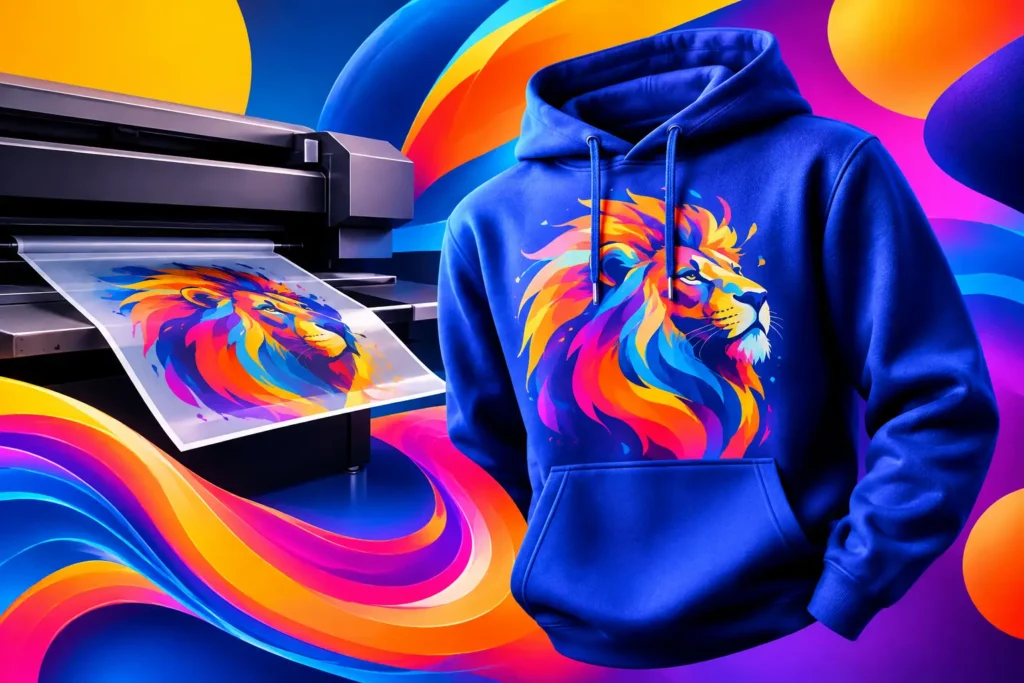
A hoodie is not just a T-shirt with sleeves. It has thicker fleece, bulky seams, drawstrings, pockets, and a hood that can make pressing more challenging. So, can DTF print on hoodies? Absolutely. When the blank, artwork, and press setup are handled correctly, DTF produces bold full-color hoodie prints that hold up for personal orders, team gear, work uniforms, brand drops, and event merchandise.
Can DTF Print on Hoodies Successfully?
DTF works exceptionally well on most hoodies because the adhesive powder bonds to a wide range of fabrics. Cotton, polyester, cotton-poly blends, fleece, and many performance-style garments can all be decorated with DTF transfers. Unlike some methods that are limited by fabric color or require a different setup for dark garments, DTF gives you vibrant color and an opaque white base on both light and dark hoodies.
That flexibility matters when you need a few birthday hoodies today, a staff uniform order next week, or branded apparel for a growing business. There is no vinyl weeding and no screen setup holding up the job. A properly prepared transfer can handle detailed logos, photographs, gradients, names, and small lettering in one press.
The catch is that hoodies require more attention than flatter, thinner garments. A transfer pressed across a zipper, pocket edge, drawstring, seam, or thick hood can receive uneven pressure. Uneven pressure is one of the fastest ways to get weak adhesion, incomplete prints, or edges that lift after washing.
Choose a Hoodie Blank That Presses Well
The best hoodie for DTF is usually a smooth, stable garment with a clear flat area for the design. A standard cotton or cotton-poly fleece pullover is a dependable choice for chest prints, back prints, and sleeve logos. Polyester hoodies also work, but they deserve extra care because high heat can cause dye migration, especially on red, maroon, navy, and other heavily dyed garments.
Fabric weight affects the finished feel. Thick fleece can support a large print beautifully, but the print may feel more noticeable than it would on a lightweight shirt. This is normal. If a customer wants the softest possible result, keep oversized solid-color artwork to a minimum and use design elements with open space where possible.
Zip-up hoodies can be printed, but placement matters. Avoid spanning the zipper with one large front design unless the artwork is specifically built for that application and the garment can be pressed evenly. Left-chest logos, back prints, and sleeve prints are usually safer choices. Kangaroo pockets create a similar issue: do not place the transfer where it crosses the pocket edge.
Before production, inspect the garment for water-resistant coatings, unusual fabric textures, heavy ribbing, or heat-sensitive finishes. These materials may need testing first. A quick test press on a sample hoodie costs far less than replacing a full order.
Prepare the Artwork and Placement
Good DTF hoodie printing starts before the heat press turns on. Use high-resolution artwork with clean edges, especially for logos, fine text, and detailed illustrations. A blurry or low-quality file will still look blurry after printing, no matter how good the transfer is.
For placement, think about how the hoodie will sit on a person, not how it looks laid flat on a table. A full-front print should sit high enough to remain visible above the kangaroo pocket but low enough to avoid the collar and drawstrings. Left-chest designs need room from the zipper, pocket, and seam. On youth hoodies, reduce the design size instead of simply using adult placement measurements.
If you are ordering gang sheets for multiple hoodie designs, organize the artwork around the actual print sizes you need. A small left-chest logo, large back graphic, and sleeve print can all share a gang sheet, helping reduce waste while keeping production moving.
How to Press DTF Transfers on Hoodies
Your transfer supplier’s instructions should always come first. Film, powder, ink, and adhesive formulas vary, so there is no single temperature and time that fits every DTF transfer. Still, the process follows a reliable pattern.
Start by pre-pressing the hoodie for a few seconds. This removes moisture and smooths the fibers in the print area. Moisture can interfere with adhesion, and fleece can hold more of it than many decorators expect.
Place the transfer on a flat section of the garment and make sure no seam, pocket edge, drawstring, or zipper is underneath the press area. Use a pressing pillow, print pad, or folded support when needed to raise the print area above bulky features. The goal is even contact across the entire transfer.
Press at the temperature, pressure, and time recommended for the transfer. Many standard DTF transfers are applied with medium to firm pressure, but do not assume more pressure is always better. Excessive pressure can flatten fleece, leave a press mark, or create unwanted texture around the design.
Peel the carrier according to the transfer instructions. Some DTF films are hot peel, some warm peel, and some cold peel. Peeling at the wrong time can pull ink away from the hoodie or damage fine details. After peeling, use a finishing press if recommended. Cover the design with parchment paper, a protective sheet, or a finishing sheet and press again to improve the bond and give the print its final finish.
A Few Hoodie Pressing Details That Matter
Do not press over drawstrings. Pull them out of the way before positioning the garment. For zip-up hoodies, use a pad so the zipper does not tilt the garment and steal pressure from the transfer. For thick fleece, a short pre-press and a consistent finishing press can make a major difference in the final result.
Also watch for scorch marks and dye migration. If you are decorating polyester or a polyester blend, consider lower-temperature transfers designed for those fabrics. Test one garment before committing to a large run, particularly when the hoodie is dark, heavily dyed, or made from an unfamiliar blank.
Common Problems and How to Avoid Them
A DTF print that lifts around the edges usually points to insufficient pressure, moisture in the garment, an uneven pressing surface, or an incorrect peel. Check the press setup before assuming the transfer is defective. With hoodies, the most common issue is often a seam or pocket edge hiding underneath part of the design.
If the print looks dull or has a rough, under-bonded appearance, the transfer may not have received enough heat or dwell time. Follow the recommended settings and verify that your heat press is actually reaching its displayed temperature. A heat press can drift over time, and even a small temperature difference can affect results.
If the design develops a discoloration after pressing on polyester, that may be dye migration. The dye in the garment can rise into the adhesive layer under heat. Use a low-bleed or dye-blocking DTF transfer for high-risk polyester garments, then test before production.
Press marks are another hoodie-specific concern. They are more noticeable on fleece and can show as a shiny box around the print area. Reduce pressure where appropriate, use a protective cover sheet, and avoid leaving the garment compressed longer than necessary. In many cases, light steaming or washing helps the fibers recover, but prevention is better than trying to fix a mark later.
Hoodie Care Instructions for Long-Lasting Prints
Once the print is fully applied, proper garment care helps preserve the color and adhesion. Turn the hoodie inside out before washing, use cold or warm water, and choose a normal or gentle cycle. Avoid bleach and harsh chemicals. Tumble dry on low when possible, and do not iron directly on the printed area.
For business uniforms, school apparel, and retail merchandise, include care instructions with the order. It is a simple step that protects the customer experience and helps your DTF print look professional wash after wash.
Is DTF the Right Choice for Your Hoodie Order?
DTF is a strong choice when you need full color, detailed artwork, dark-garment printing, short runs, or fast production without the setup costs of screen printing. It is especially practical for one-off custom hoodies, small business logos, reunion apparel, memorial designs, staff gear, and multi-design orders built on gang sheets.
For very large runs with a simple one- or two-color design, screen printing may still be worth considering. For an all-over print or a garment with an extreme water-resistant finish, another decoration method may fit better. The right option depends on the blank, quantity, artwork, deadline, and desired feel.
At GFX The Print Shop, we help customers move from artwork to finished apparel without making the process complicated. Whether you need a single personalized hoodie or transfers for repeat production, start with a quality blank, test when the fabric is unfamiliar, and give the press setup the attention a thick garment deserves. That is how a hoodie print goes from “good enough” to ready to wear with confidence.